Driveway
Data-driven simulator for closed-loop RLFT
Driveway (MetaDrive + Waymax) is a data generation and training pipeline designed to enable closed-loop reinforcement learning fine-tuning (RLFT) for autonomous driving at scale, connecting existing scenario generation frameworks with a JAX-native simulator
Driveway is an integration layer that combines:
- MetaDrive / ScenarioNet for scenario generation and dataset diversity
- Waymax for efficient, JAX-compatible closed-loop simulation
The goal is to make procedurally generated and multi-dataset scenarios usable inside a simulator that is already well-aligned with modern ML training pipelines.
Motivation
Closed-loop RLFT for autonomous driving places two practical requirements on a simulator:
1. ML-infrastructure compatibility The simulator must integrate cleanly with large-scale, accelerator-backed training pipelines. → Waymax is chosen because it is JAX-native, enabling vectorized rollouts, differentiation, and tight coupling with model training.
2. Scenario diversity and data flexibility RLFT requires exposure to both in-distribution and systematically generated out-of-distribution scenarios. → MetaDrive, together with ScenarioNet, provides mature tooling for:
- Procedural scenario generation
- Support for multiple datasets and benchmarks
- Controlled variation over map layouts and traffic configurations
No single existing platform satisfied both requirements simultaneously.
Core Idea
Driveway connects MetaDrive-style scenario generation to Waymax-style closed-loop simulation through a structured data pipeline.
- MetaDrive / ScenarioNet act as scenario backends
- Waymax acts as the simulation frontend
- Driveway translates scenarios between the two without modifying either system’s core design
This allows scenarios that are:
- Generated procedurally
- Loaded from diverse datasets
- Parameterized for stress testing
to be executed inside a JAX-friendly closed-loop simulator suitable for RLFT.
System Flow
1. Scenario Generation
- MetaDrive / ScenarioNet generate or load scenarios
- Supports both logged datasets and procedurally generated variants
2. Data Translation
- Scenarios are converted into a Waymax-compatible representation
- Preserves road geometry, agent states, and temporal structure
3. Closed-Loop Execution
- Waymax executes the scenario in closed loop
- Ego policies interact with reactive agents via IDM
4. Training Integration
- Rollouts are consumed directly by RLFT pipelines
- Compatible with large-scale JAX training workflows
Result
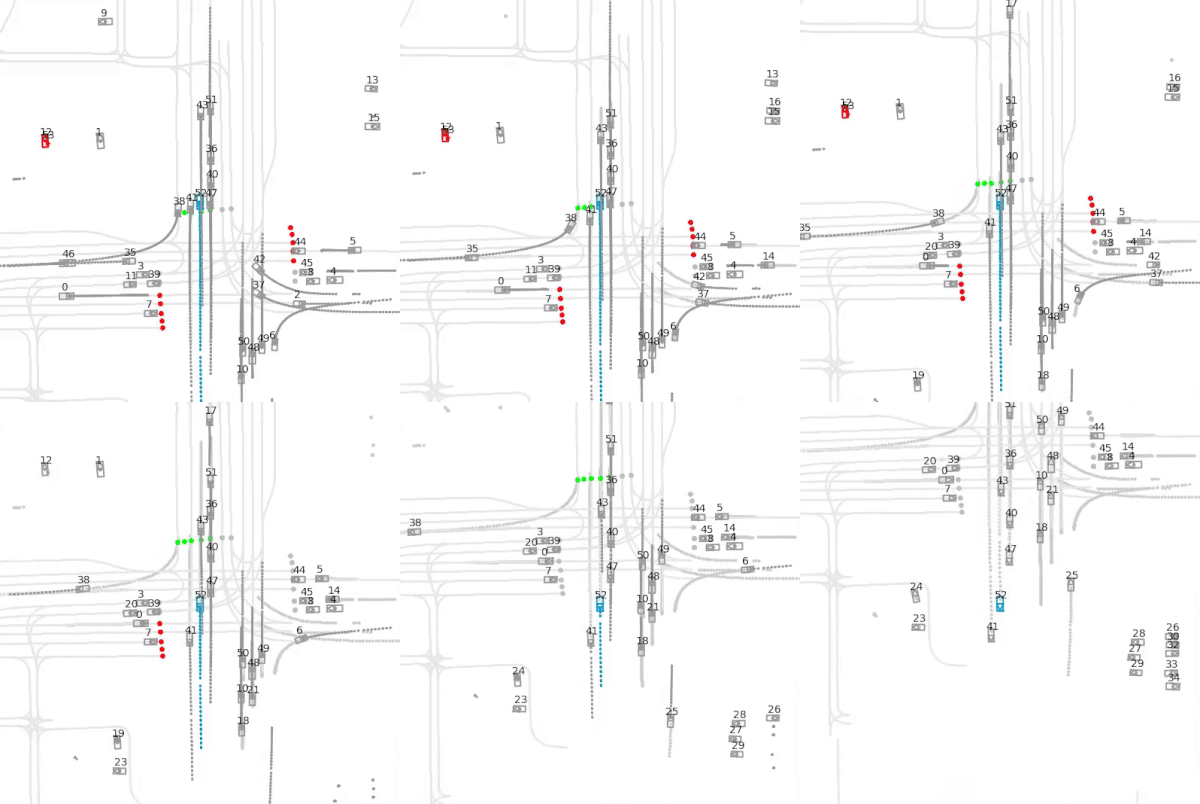
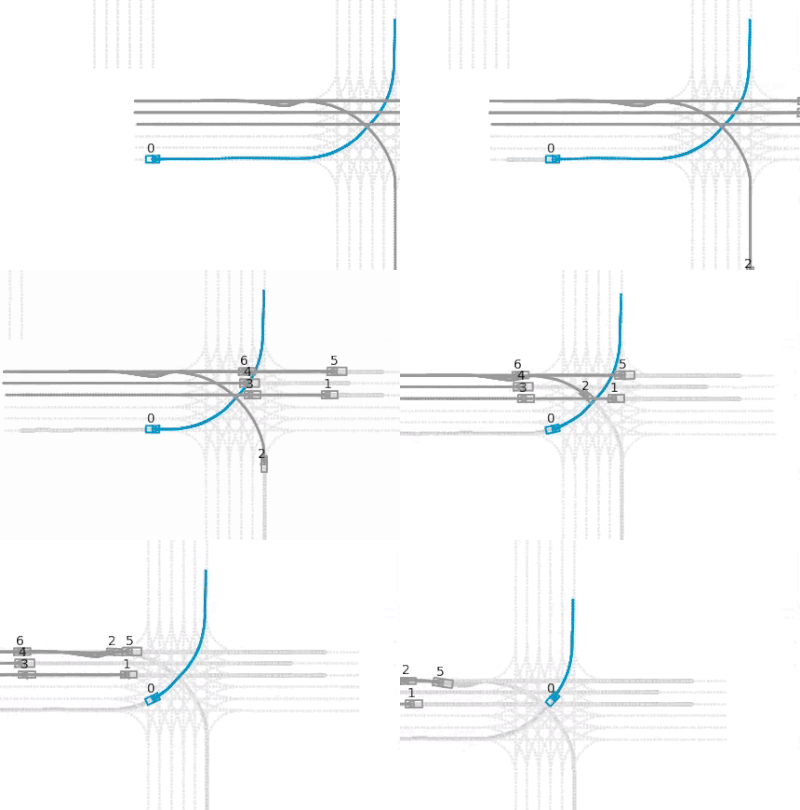
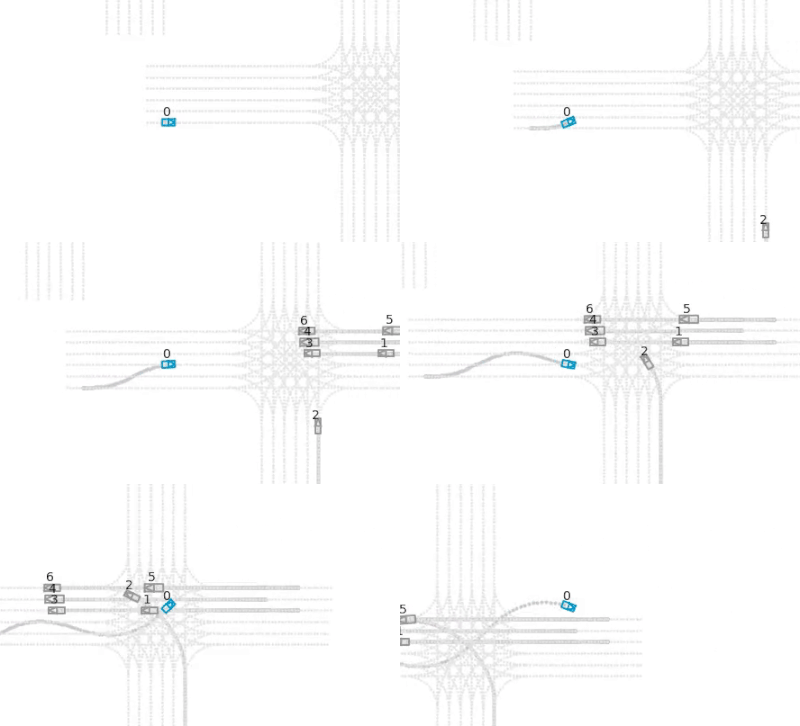
Roadgraph feature types between MetaDrive and Waymax are consolidated, so that scenarios from MetaDrive and easily be loaded and used in Waymax:

The following figures show a scenario created with MetaDrive, loaded in Waymax, and controlled using Waymax’s IDM.
Using Driveway, we can create and inverleave numerous scenarios, both in-distribution and out-of-distribution. In addition, when combined with previous works in game-theoretic multi-agent trajectory optimization in adversarial context (Anthony et al., 2022), we can create true adversarial scenarios on top.